When a roof is actually done
Nobody replaces a roof because a number was reached. They replace it because something told them to. Here is what those somethings look like.
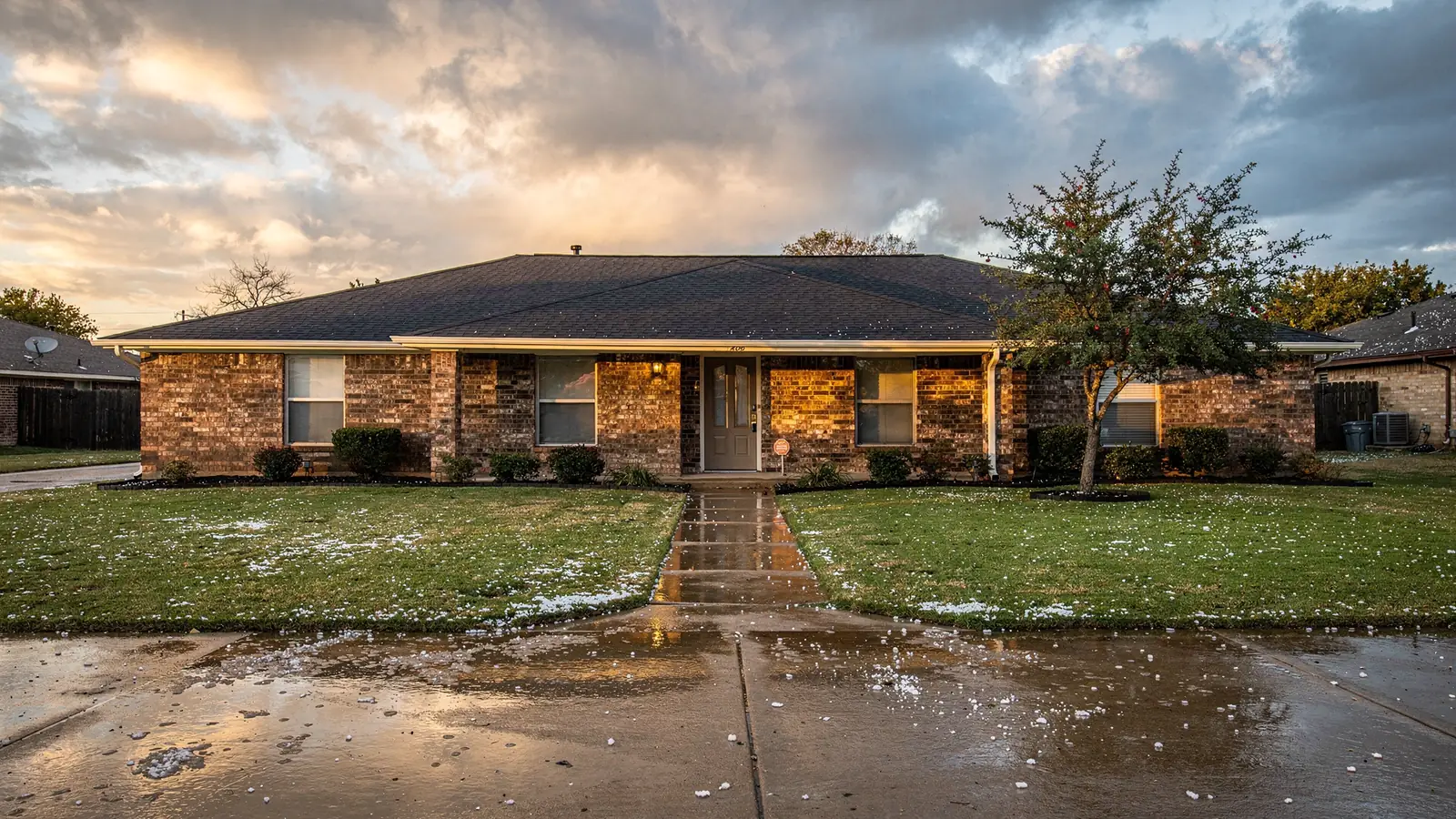
People imagine roofs end with a leak. Most of them do not. Most roofs in this county get replaced because somebody finally added up a set of small signals that had been there for years, or because a storm forced the question.
Both are fine reasons. What costs money is not reading the signals at all, because a roof past its useful life is worth less to an insurer every year that passes, and a claim on a roof that should have gone five years ago is a harder conversation than the same claim would have been.
What actually ends a roof here
It is the sun, not the rain. Asphalt shingles are a mat saturated in asphalt with a mineral surface on top, and that surface is there to keep ultraviolet off the asphalt underneath. Once enough of the granules have gone, the asphalt is exposed, it dries out, and the shingle loses the flexibility that lets it lie flat and shed water.
That process runs faster on a slope facing the afternoon sun than on the one opposite it, which is why the two halves of the same roof so often look like different ages. It runs faster still on a roof over a poorly vented attic, because the deck underneath is hot as well.
Hail accelerates all of it. A bruise fractures the mat below the surface without opening the shingle, so nothing leaks that year. What it has done is remove some of the life the roof had left, and the failure turns up several years later with no storm anywhere near it.
The four signals worth knowing
Granules in the gutters. A handful on a roof of any age is normal. A layer of grit that builds back up after you clear it is the surface leaving, and that is the clock running out.
Curling and cupping. Look along a slope from the side at a low angle rather than straight on. Tabs that have lifted at the corners or turned up at the edges have dried and shrunk, and they no longer seal to the course below. That is what a strong gust finds.
Bare patches and shiny black. Where the granules have gone completely the surface reads darker and slightly glossy. Scattered patches across every slope point at hail. Patches in a walking route point at somebody who was up there. Patches on one hot slope point at age.
Ceilings and the attic. Faint brown rings in upstairs corners, or daylight through the deck when you put your head in the attic, are the late signals. By the time they appear the decision has usually been made for you.
Where the line sits between repair and replacement
A sound roof with one broken part is a repair, every time, and the repair should be priced like one. What is worth repairing goes through the parts that actually fail.
The line moves when two things are true together: the roof is old enough that its remaining life is measured in a few years, and the fault is one that appears in several places rather than one. At that point money spent on repairs is rent rather than investment, and the useful question becomes when rather than whether.
Do the arithmetic before the storm, not during it
The worst time to work out what you want is the fortnight after a hail event, with a lot of out of county trucks in town and somebody at the door with a clipboard. The best time is a quiet afternoon with a ladder against the gutter and ten minutes of looking.
If a storm has already been through, start by establishing whether the damage is genuinely hail rather than something that resembles it, which is on the hail page. If it is, the order of the steps in a Texas weather claim is on the claims page, and it matters more than anything else you do. And what the job itself should cost, which is a different number from what the insurer agrees to pay, is on the cost page.
Questions people ask
- I have no idea how old my roof is. How do I find out?
- Three routes, in order of reliability. The county appraisal record sometimes notes a permitted replacement. A seller's disclosure from when you bought the house often says something and is worth digging out. And a roofing company can usually date a roof within a few years from the product and the way it was fitted. Failing all of that, the condition tells you more than the date would.
- Does a thirty year shingle last thirty years here?
- No, and the number was never a promise about time. It describes a warranty schedule that declines year by year and mostly covers the product rather than the labour to fit a replacement. In Central Texas heat, with hail arriving several times in a roof's life, plan on a good deal less than the figure on the wrapper.
- Is it worth replacing before I sell?
- It depends on what the roof is doing rather than on what it is worth. A roof that will fail an inspection is a negotiation you will have anyway, usually at a worse price than doing the work. A roof with years left is money you will not get back. The middle case, an old roof that still works, is the one worth getting a written opinion on before you list.
Last checked 2026-09-28.