Repairs, and when a repair is the wrong answer
Plenty of roofs get replaced that needed a part. Plenty get patched that needed replacing. The difference is usually visible from the ground.
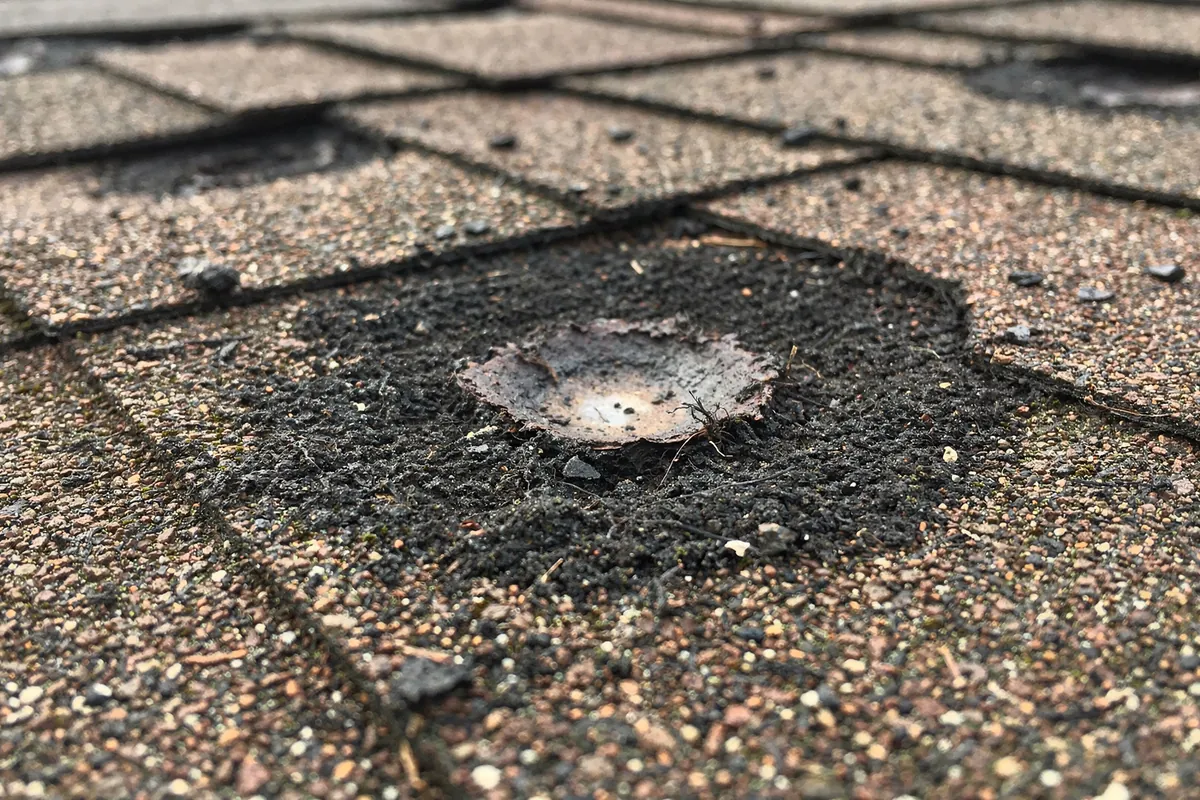
The question is not the leak, it is what else is up there
A leak announces itself in one place, which makes people think in terms of that one place. The useful question is different: is this a sound roof with a broken part, or a roof that was put on badly and has started showing it.
That question is answerable in an hour by somebody on the roof, and the answer decides whether you are spending hundreds or thousands. It is worth asking directly, in those words, and worth being wary of anybody who moves straight to a replacement proposal without addressing it.
The parts that actually fail
Vent boots first, by a long way. The rubber collar around a plumbing stack has a service life considerably shorter than the shingles around it, and in this climate the sun is what ends it. It splits, water runs down the pipe and into the deck, and the stain appears on a ceiling in a place that has nothing to do with where the water got in. It is a cheap part and a short job.
Flashing next. Where a roof meets a wall, a chimney or another roof, the waterproofing is metal rather than shingle. Flashing that was face nailed instead of woven into the courses, or that was reused when the roof went on because it looked serviceable, fails at exactly those junctions.
Then sealant, which is not a roofing material and is treated as one constantly. Anywhere a previous repair is a smear of black mastic, you are looking at something that was postponed rather than fixed, and mastic has a life of a very few years in Central Texas heat.
And ridge and hip caps, which sit in the most exposed line on the roof and are the first thing a strong gust lifts.
The tell that a repair is the wrong answer
One thing found once is a repair. The same thing found in several places is a pattern, and patterns come from whoever fitted the roof rather than from the weather.
So if the person up there reports nails driven above the sealing strip in more than one place, or step flashing missing at more than one wall, or several boots of the same age all cracked, what you have is not a set of repairs. It is a roof whose faults are systemic, and paying to fix them one at a time over three years costs more than doing it once.
The other clear tell is age. A roof in its last few years can be patched, and that patch is buying time rather than fixing anything. Which is a perfectly good thing to buy, so long as everybody is honest that it is what is being sold.
Repairs after a storm are a different conversation
If the damage arrived in an afternoon, the question shifts from what it costs to who pays, and the order of steps matters. Establish first whether the damage is genuinely hail, because a great deal of what gets called hail is not, and the way to tell does not require anybody on the roof. Then read how a Texas weather claim runs, because getting that sequence wrong is where people lose money.
And if the answer turns out to be a full replacement, what drives the price is a separate page, because the insurer's number and the job's number are two different things.
Questions people ask
- There is one wet patch on a ceiling. Does the whole roof need doing?
- Not on that evidence. A single leak usually traces to a single failed detail, and the commonest by a distance is a cracked vent boot. What decides the question is what else is found once somebody is up there. One bad detail on a sound roof is a repair. The same detail failing in four places is a roof that was fitted badly and is telling you so.
- Will a repair match the rest of the roof?
- Not exactly, and anybody promising otherwise is guessing. Shingles fade in Texas sun and manufacturers change their colour blends, so a patch reads as newer for a few years and then settles in. On a slope that faces the street that is worth knowing before the work rather than after.
- My roof is nineteen years old and it leaks in one spot. Repair or replace?
- Ask what you are buying. A repair at that age buys time on a roof that is going to be replaced regardless, and time is worth real money if you are not ready. What it should not do is cost a meaningful share of a replacement. If the repair quote is creeping up toward a quarter of the new roof, the arithmetic has stopped working.
Last checked 2026-09-28.